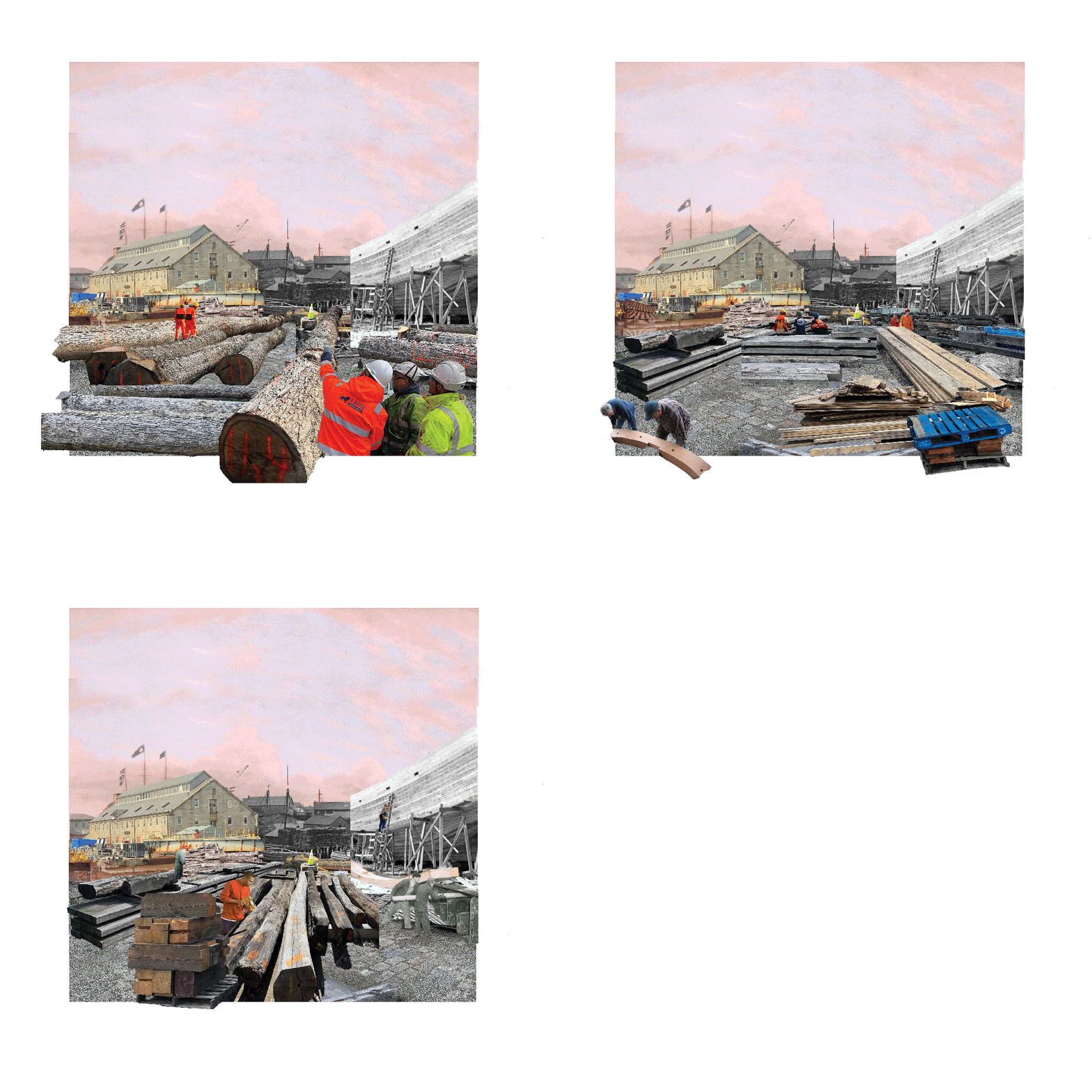
Walking the docks of the Navy Yard one is met with a spectacle of maintenance – heaps of freshly felled timber, rotten boards pulled from the ships’ depths, copper sheathing laboriously applied, and the constant building & unbuilding required to uphold the ship’s appearances. A large portion of the site is dedicated to the drying and processing of timber for future repairs, stacked up in piles amongst old ship parts. Throughout the site, visitors are confronted with the material and territorial origins of the symbolic form before them.
The heaps of materials blur the boundary of the symbolic form of the ship, challenging its reading as an isolated, total whole – the ship is always in a state of incompletion. In the parable of the ship, the analogue of seeing the forest for the trees is seeing the shipyard for the ship – in reality, this form is deeply entangled with processes that draw out over centuries, and sprawl out over the Navy Yard.
Rather than occurring surreptitiously, out of sight, as is the case in buildings, the construction, repair, and maintenance of the ship is instead a public event that sprawls across the site. In the construction of buildings, most urban projects are heavily restricted by the spatial constraints of their site, making the temporary storage of building components inconvenient, or even impossible. This dictates a just-in-time approach to material staging and removal, requiring that they be removed as quickly as
possible, removing a tolerance for lag and delay in the construction process that is critical for circularity.
What if the building itself – its structure and its skin – could become complicit in the storing, staging and processing of the materials used in its construction? How could this encourage a reading of the building that acknowledges the terrestrial and time-based processes involved in construction?

 Inge Donovan | Portfolio