Sheltered deep in the Boston Harbor is the USS Constitution, the sole remaining vessel of America’s original Naval fleet. In its current state the ship represents a formal whole whose function has been supplanted by its value as a symbol, today serving primarily as a national monument, instead of as a ship. However, beneath the appearance of semiotic stability- a quality crucial to its function as a monument- lies a concealed reality. In truth, less than 10% of the ship can be properly considered original, the majority of its material having been replaced periodically throughout its nearly three centuries of existence. In an unfolding inward chronology, the age of its timber grows as one moves deeper into the core of the ship – to the last remaining original timbers which comprise the keel.
The Ship of Theseus paradox, handed down in Plutarch’s Parallel Lives, forces a confrontation with the discrete material constituency of identity, and an interrogation of the relationship between an object, the parts, and materials from which it is constructed. The built assembly, when it is maintained, thus becomes paradoxical, undermining the reading of the building as a semiotically stable, indivisible whole. As a design framework, this challenges the inherited perception of architecture as executed in a single act, as fixed in time and space, whose boundaries can be circumscribed by the forms we perceive.
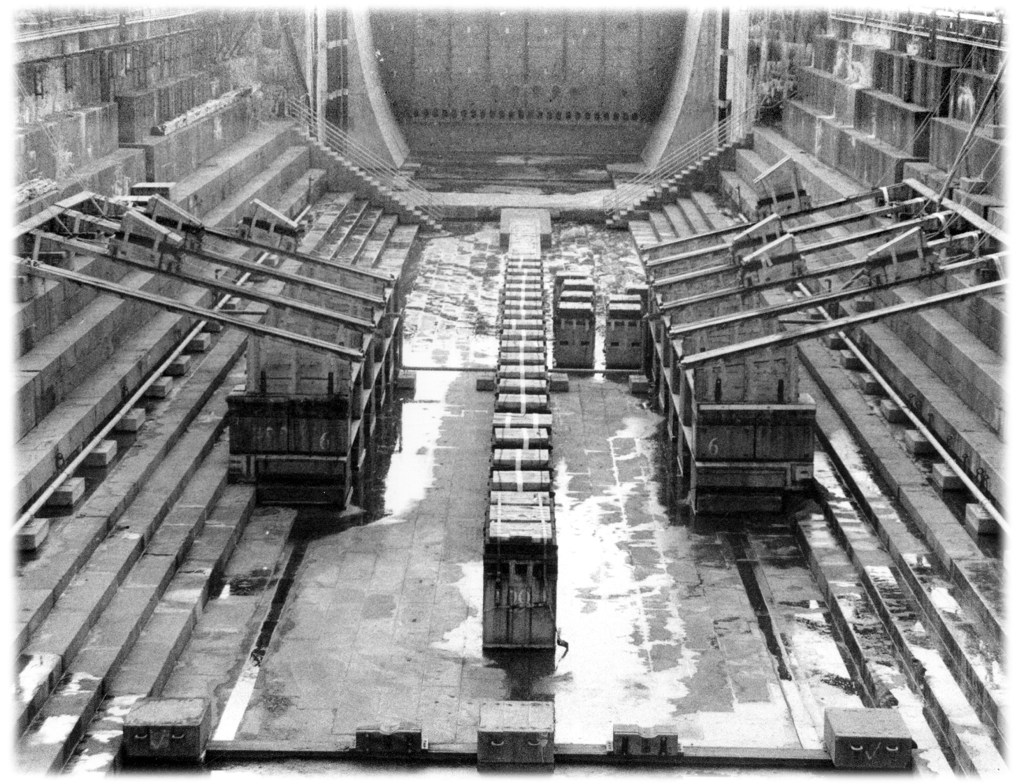
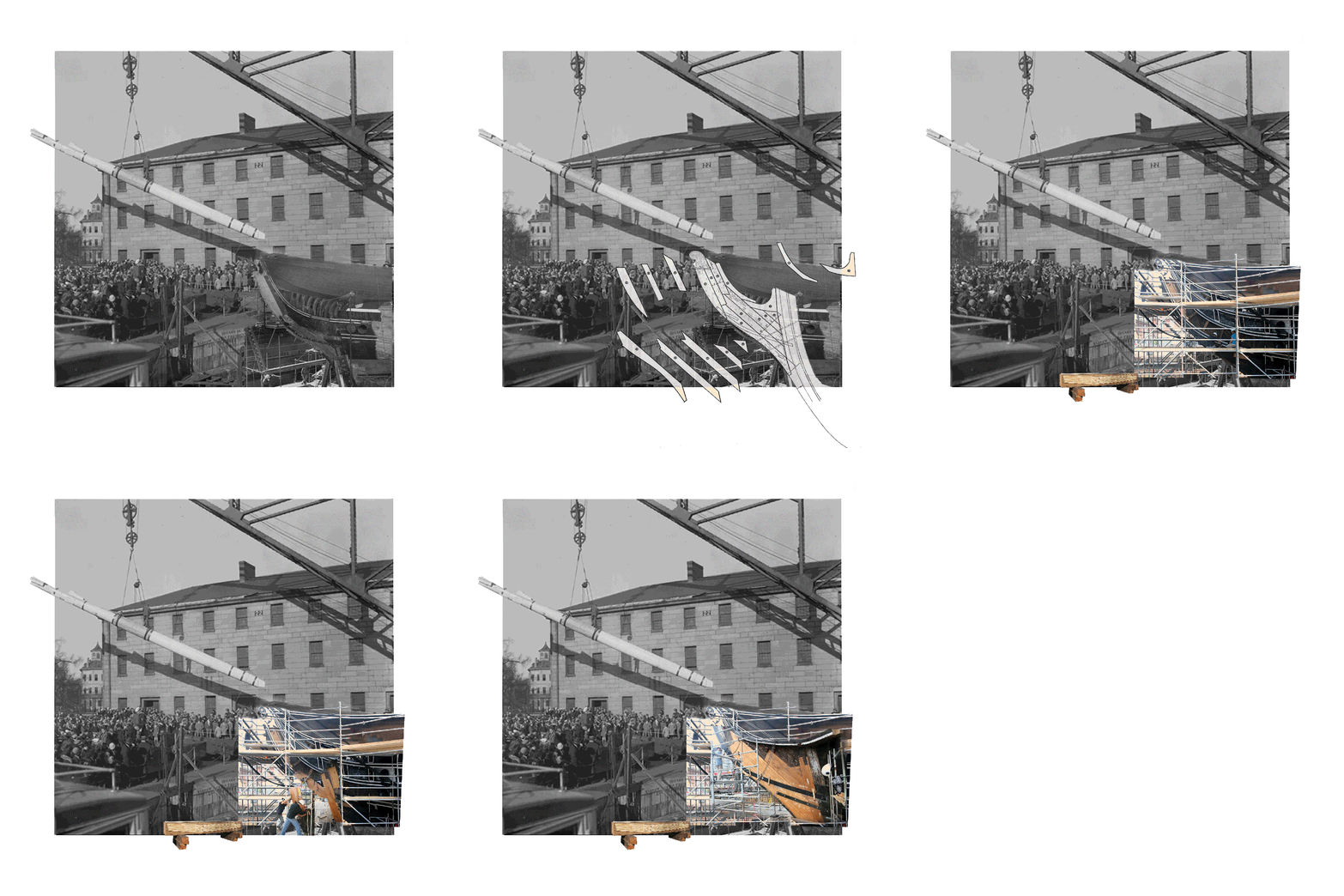
To make the periodic repair of the ship possible, a spectacle of maintenance occurs on average every ten years within the confines of Dry Dock 1, on full display for the public to observe. While devoted to the presercation of the ship, the spectacle is equally devoted to the preservation of the knowledge and material culture of construction which underpins it.
What is provocative then, about this case of this ship, as an inherently siteless, mobile, and deterritorialized form of architecture, is that it forces us to confront the inherently territorial nature of its existence, undermining a reading of the building as complete whole.
 Inge Donovan | Portfolio