This week I’ve noticed several op-eds criticizing the dynamic, flat and colourful design aesthetic that is prevalent among big tech companies such as Google, Facebook, Lyft, etc. As my friends can attest, I’ve been openly voicing my irritation at this type of design for several months as it becomes so ubiquitous that it could almost be considered the standard: it encompasses the universality, marketability and aesthetic that every start up wishes to achieve. This style has achieved such a strong foothold – and in that sense almost transcended the Zeitgeist – that Facebook has given it a name, Alegria.
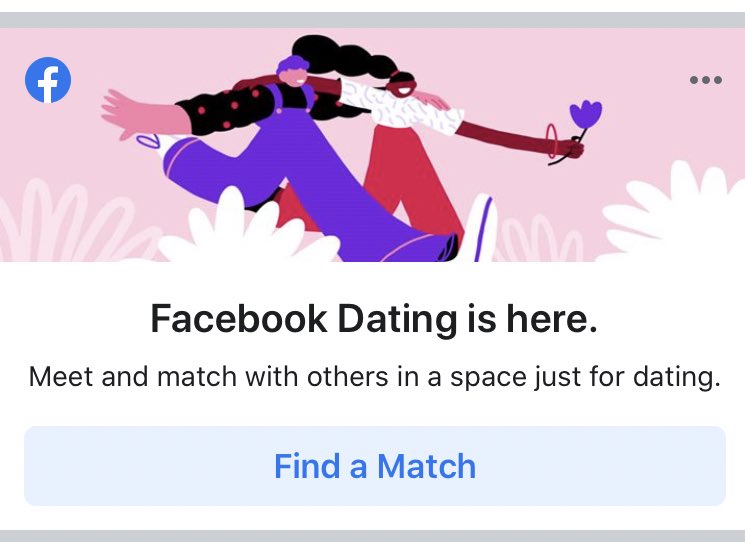
Rachel Hawley describes these illustrated people as “always in motion, dancing, painting, running, or hugging one another with the expanse of their oversized limbs arching away from their bodies like giant wet noodles.” Claire L. Evans curates a collection of these incidents, dubbing the phenomenon as “Corporate Memphis,” while others suggest terms such as “Neoliberal Vector Minimalism (NVM).” The parody account ‘Humans of Flat Design‘ has over 5000 followers, making it evident that there is a frustration amongst graphic designers and the consumers of their work alike.
The main critiques of the Flatlander style is centred around the concept of diversity (inclusivity). The companies that use this illustrative style, such as Google and Facebook have the challenge of representing a vast consumer base, each of which they wish to be able to recognize themselves in their representation. As we increasingly form our identity through digital media, and as our self is increasingly channelled through these simulations, these illustrations offer the path of least resistance – after all, I have more in common with a prancing blue lady with burgeoning legs than I have with the more obvious consumer, perhaps a middle aged man whose etiolated body is draped in a gaming chair, right? The main critique from design professionals is that this style is quick and easy, and now so widespread that it can hardly be considered original.
The second critique is focussed around the perceived friendliness and benevolence of

this illustration style, as some argue that this aesthetic is being used to conceal the malpractice with respect to privacy and personal data that is ubiquitous in tech companies, as seen in the many privacy scandals we have suffered in the past few years. Hawley argues that the happy aesthetic is a centrepiece to their strategy to conceal the social and political harm they have caused. Thus, the manner in which the bodies and skin colours are far removed from real life symbolizes the disconnect between large-scale tech companies and the common interest – in the end, these illustrations are simply a marketing trick that will generate increased profit.
While these social and economic critiques are strong, I think it is also important to consider the impact of the implicit geometries of digital media on this illustrative style. While traditional graphic design and 2000s-era UIs attempted to imitate the three-dimensionality of the real world, contemporary digital design has abandoned this skeuomorphism for a flat aesthetic which is more user-friendly and can be scaled more easily across the many different interfaces through which we access media. In this sense, our Flatlanders are perfectly at home in their two-dimensional medium, blissfully unaware of their three-dimensional observers.
While the turn towards 2D may seem like a regression with respect to our ability to immerse ourselves within technology (which is of course the goal of most digital media), to me it seems that this phenomenon is actually a reconciling of the manner in which we use media – how we map two-dimensional images along a one-dimensional feedback loop – thus signalling an important evolution. It remains incontrovertible that currently, our immersion in digital media does not occur in three dimensions, and thus these flat people become diluted versions of imagined digital selves: our bodies no longer rigid and defined, but merely ideas; our limbs bending impossibly to stand in for envisaged actions, and the world transforming into a colourful technological utopia far removed from the grim realities facing us in the real world, their ignorance to it synonymous to Edwin A. Abbott’s Flatlanders’ ignorance to any higher dimensions, in which manifestations were mysterious and unexplainable.
Perhaps tech companies are not to be blamed at all – they are merely giving us representations of how we already feel. It is clear that the prevalent interface – the screen – has fundamentally transformed our perception of ourselves in space. In my recent visit to the MoCA in Toronto, in their (admittedly pedestrian) Age of You exhibit, a contributor wrote “I’ve a friend who, in a fit of existential rage, smashed his smartphone with a roadside rock. He said he wanted the outside world to feel like the outside world again, and not just an appendage to the screen,” illustrating perfectly the dimensional erosion that occurs when we begin to occupy the digital realm more intensively and more personally than we do the world outside it.
 Inge Donovan | Portfolio