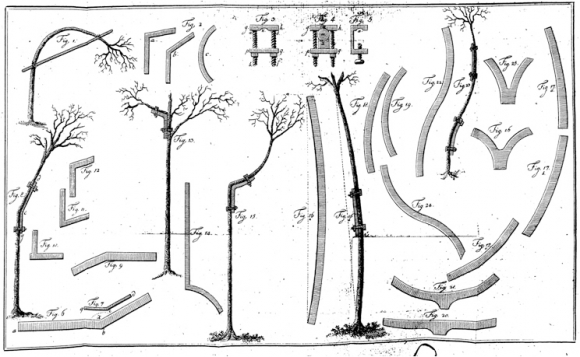
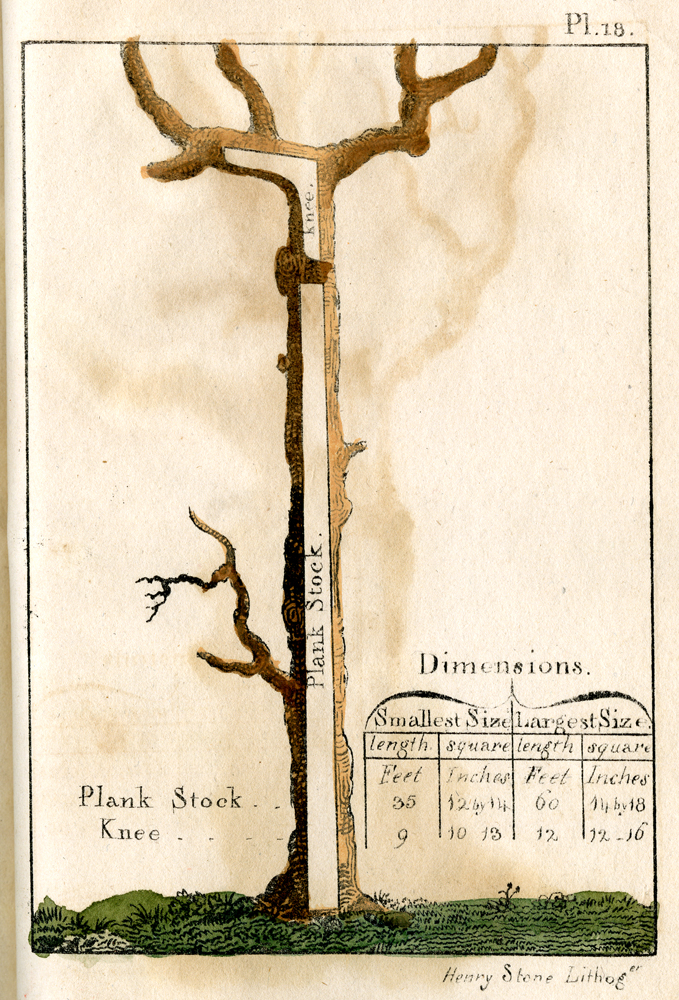
The construction of the complex geometries required of wooden ships hinged on the specification of specific tree morphologies, including forks, knees, and other curved elements, as well as particular species whose material properties allowed it to resist the vagaries of a marine environment. Initially this stock could be foraged in the vast forested landscape of North America.
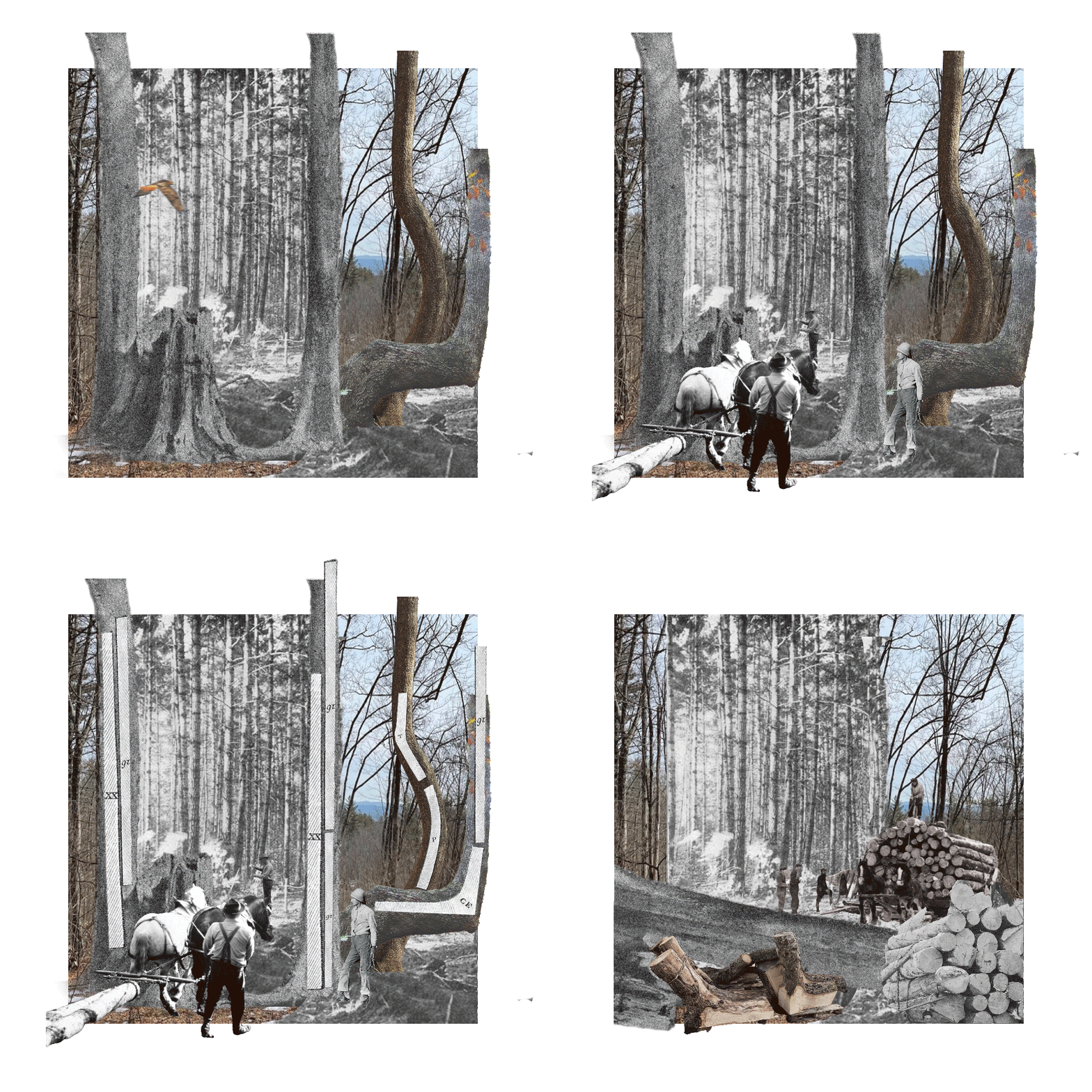
Like their European counterparts before them, American shipwrights surveyed forests across the entire United States, mapping components of the ship onto arboreal geometric morphologies. In time, this so radically altered the character of the American landscape that environmentalists and shipwrights alike began to take note and seek ways of sustainably providing for the material needs of the shipbuilding industry.
In 1800, shipwrights tasked with the upkeep of the US naval fleet recognized that drastic measures were long overdue to protect the national forests from unchecked deprivation, leading to the state setting aside various forest groves for preservation. In the mid-20th century, the USS Constitution – facing similar shortages of old growth live oak, inaugurated Constitution Grove, a 4000 acre preserve dedicated solely to the upkeep of the ship, a story which is often cited as fundamental in the ship’s endurance through time.
Here, an act of conservation was spurred by the territorial demands of a built assembly, specifications made by builders and designers dictate what trees are felled, and what geometries are preferred. This story renders apparent the reciprocity between forest and assembly, evoking a provocation of building as a cultivating force on the landscape. How could the recognition and design through this condition of entanglement provoke a new legibility of the relationship between material assemblages and broader ecologies of construction?
 Inge Donovan | Portfolio