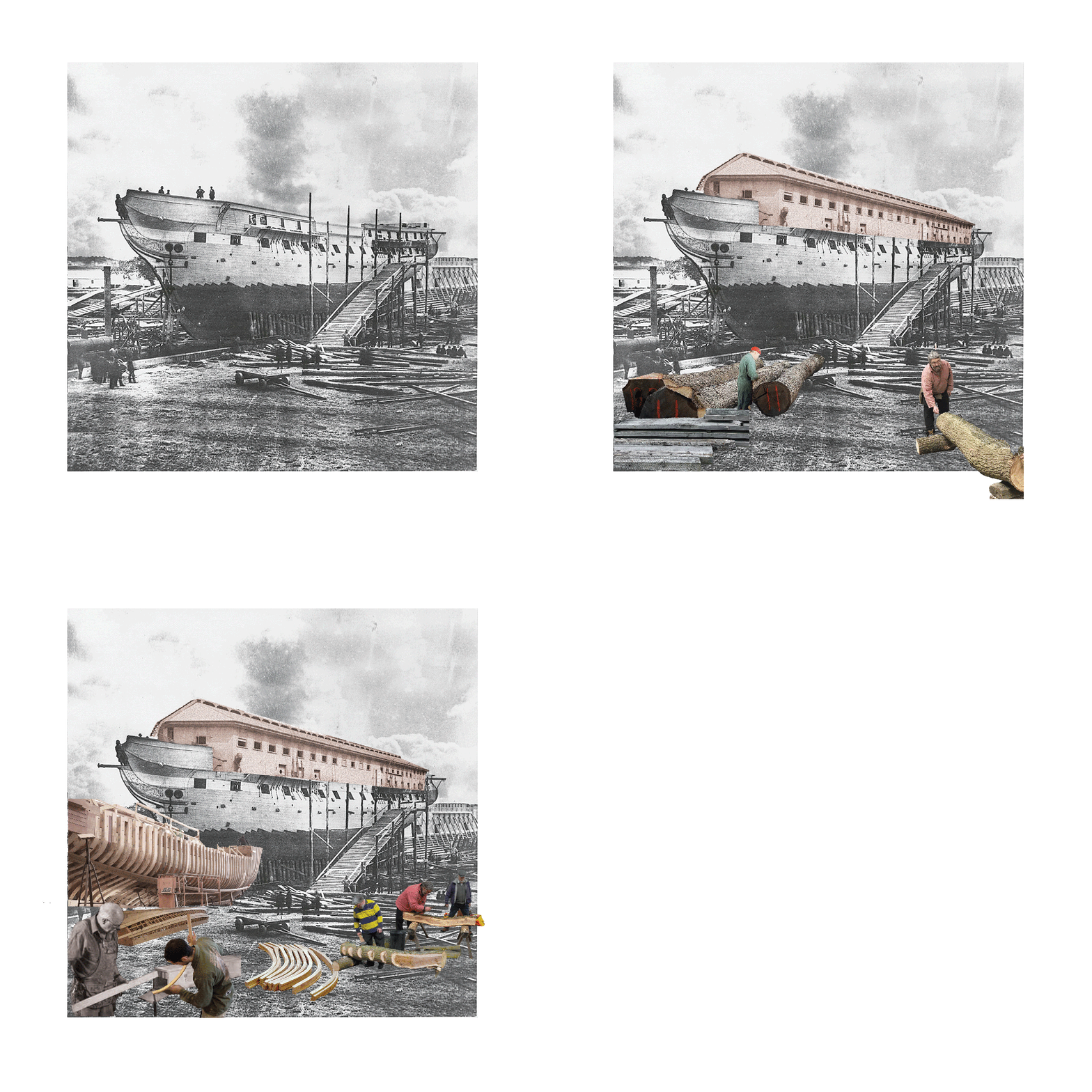
The Constitution’s functioning as a historical object hinges on the semiotic stability born of a perceived continuity of form. However, just as the Constitution has transformed materially through time, it likewise spent many decades shifting morphologically in adaptation to changing function. With the obsolescence of sail-powered naval fleets, it was converted from an active warship into a barracks to lodge navy officers, a training facility, and ultimately, a museum. The ship’s ability to sail under self-power was only recently restored in an intensive retrofit conducted in 2017.
The Constitution’s survival is as much a story of serendipity as it is one of stewardship, as the ship was able to change formally and structurally to accommodate new use cases. Here, instead of the same form housing new functions, the ship was retrofitted and rebuilt to accommodate the changing demands of disparate programs – a history that undermines the implicit continuity of the monument.
What would it mean for us to recognize the inherent transitory nature of program as it occurs in building? How might we anticipate and design for these multiple futures?