Analogue images and their indexical function
A Short History
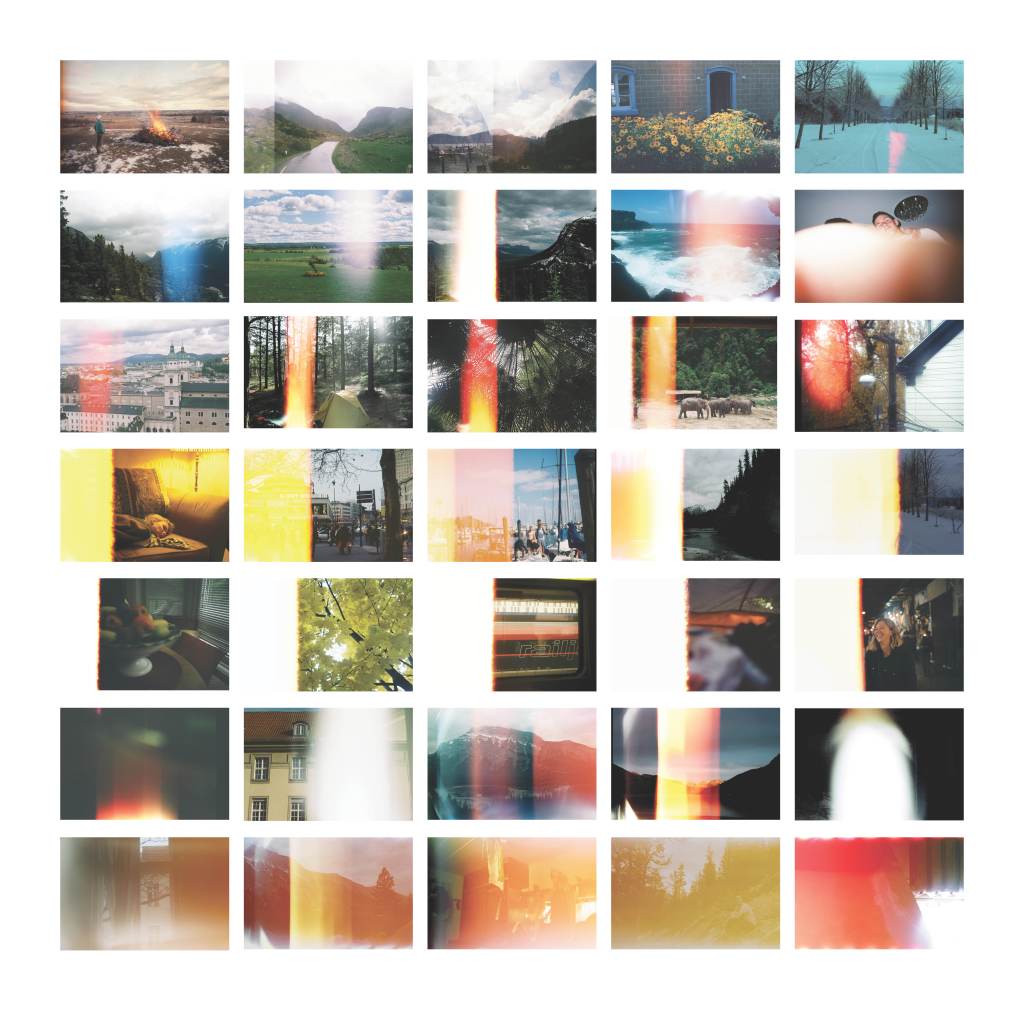
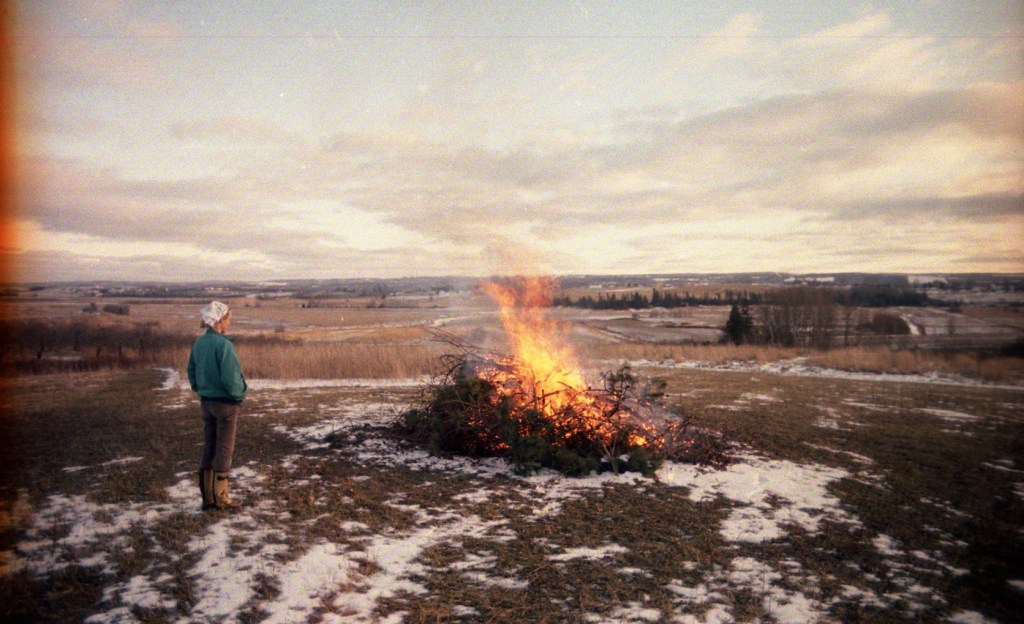
The summer. It was past dark, the flicker of the fire providing scant light. A small, smooth object, was placed into my hand – an object which I immediately recognized in its haptic familiarity – which sparked a long-forgotten memory: my first camera.
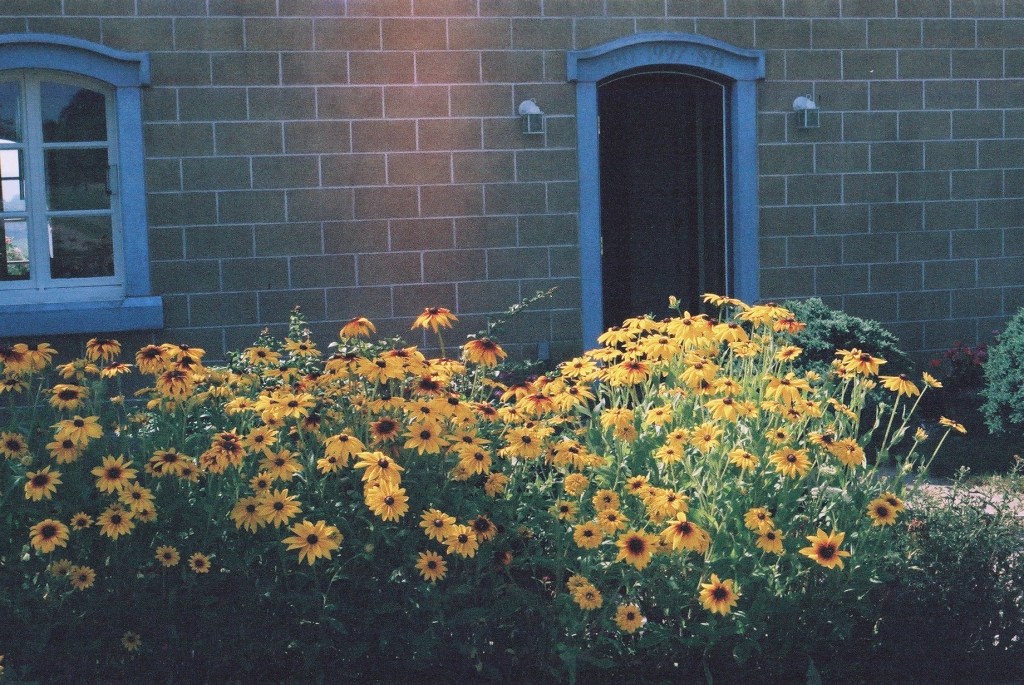
My second camera surfaced a few years later. It was a Nikkormat FT2, and it was 2008, the year in which I began shooting my life. The chemical imprints that still exist are my dolls, arranged in the garden, twelve underexposed shots of the black eyed susans exploding out of the flower beds in front of the house (before I knew of the value of money), and of towering summer afternoon cumulonimbus clouds, orange streaks of light (photo graphs – Gr. “marks of light”) interrupting the scenes.
What I have always had a hard time explaining is that analogue photography was never about the aesthetic value of the image – I would only ever take one image of the subject at hand, and I rarely shot more than a roll of film per month, sometimes even stretching out a roll over three or four. My collection of photographs became a repository of memories, or perhaps more accurately of moments – fleeting instances of time, the urge to document likely induced by the fact that I have a terrible memory. The anticipation of the emotional value of the images and the nearness of the thing caused me to increasingly shoot things that made me feel something, and my focus turned to the places I associated with memories, to abandoned houses, to the tides and seasons, to life and decay and chaos and ephemeral instances of torrential light. As I grew older, my self became recognizable in these images.
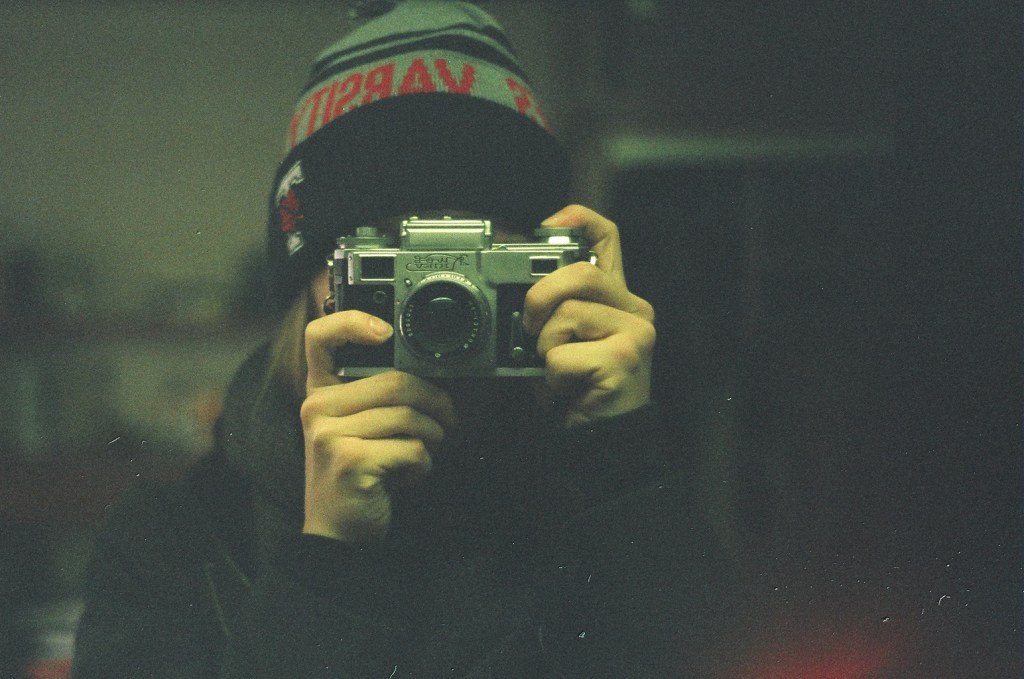
And unlike my other pursuits – things which came in spurts, which ebbed and flowed painfully, my photography, my repository of time, remained constant. (A brief stint with a digital camera ended when I was faced with 1200 photos, all of which were void of meaning, and, which in consequential irony disappeared from my computer. I realized that they had never existed at all.)
The Question of Time
The analysis of the camera’s indexical function is rather out of fashion, but the issue of time is crucial to my understanding of analogue photography. The pressing of the trigger (the violent act, as Sontag would have it) is a blind grasping of a moment – of the sounds echoing off walls, the light swelling with the wind, the clamour of a narrow alley or the intense, breathing silence of a winter landscape. In a predefined temporal window, the image is chemically and materially imprinted on the film, but so is the taker of the image – the quiver of their hand (a tremor I can’t seem to outgrow, in my case), or perhaps the red smudge of their finger in the frame.
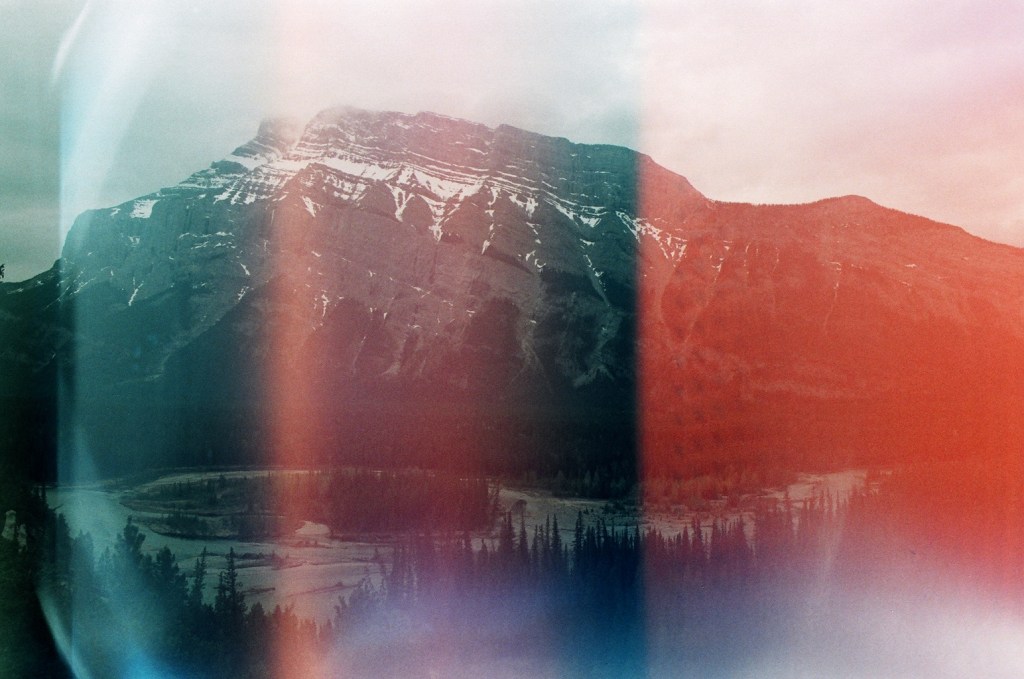
It was the fingerprint that differentiated traditional artworks (painting, sculpture) from the emergent phenomenon of photography – art in the age of mechanical reproducibility – for Walter Benjamin, emptying it of its cult value, with only exhibition value remaining. Contemporary images exist primarily as a communicative medium, and in the age of digital photography, the ability of the image to function as a time repository is radically stripped down.
These fingerprints become symbols of time, the action of the taking of the photograph and of the transport and the development of the film encoded within the image. The images are not immediate – they undergo a laborious process of development, a forcible rupture from the moment in which they were captured, and thus they acquire anticipatory and nostalgic value. This temporal separation renders them opaque in the sense of Kendall Walton, while digital instantaneity creates images which can truly be considered transparent, merging them into reality, in which we are increasingly perceiving ourselves through the frame of the viewfinder (the screen), which functions through technical images. The temporal separation of the analogue photo proportionally increases the noise within the communication, and the virtually instantaneous property of digital photography radically cuts this down, although of course, its entire removal is completely illusory.
In Gramophone, Film, Typewriter, Friedrich Kittler argues that photographs “establish a realm of the dead” as they create the feeling in the observer that the subjects photographed are real, and thus are alive – and in the photograph they are preserved, and are thus dead. While this observation functioned perfectly with analogue photography, through the instantaneity possible with digital photography, and through its merging into a cultural media as a communicative medium, technical images lose their indexical function and become muddled with reality – with the now.
Contemporary timelines, on which digital media are displayed, also play a large part in the shift from the indexical function to Benjamin’s photographic exhibition value. While these timelines are still ostensibly linear, functioning on vertical (functionally sagittal) and horizontal axes, algorithmic sorting has further removed their indexical function, instead organising them according to complicated value attribution. The shift from chronological to algorithmic sorting in social media has further blended images into the present, creating an infinite “now” and further depleting digital images of their value as indexical documents.
This phenomenon results in the cleft between the crisp digital realness inherent in technical images and in the nostalgic value attributed to chemical images, as is evident in the ghost of the analogue that noticeable in contemporary culture.
A Cultural Resurgence
Interestingly, our cultural desire for perfection and for transparency seems to be inversely correlated to our ability to achieve it, although instantaneity is something which we will not surrender. The fetischization of film in contemporary culture is undeniable, initially emerging in filters which apply retro effects to our images, in apps that overlay light leaks and time stamps, and in the renewed popularity of polaroid cameras. In the age of digital media and in the mechanical reproduction of images for mass culture, it is apparent that we crave the existence of the photograph as a physical and (artificially) temporal object. This desire could be a desire to position ourselves between history and the future, as actors in the progression of time, but also as a physical safekeeping of our past.
An interesting question arises when the visual difference between analogue and digital photography is considered, when one takes into account the fact that these images can look extremely similar on the surface, which makes evident that the fetischization of analogue is not explicitly a visual issue. Here, the noise inherent in analogue photography is recreated artificially and retroactively superimposed on the “perfect” image, thus creating a false sense of distance and of history, again making manifest our desire for photographs to be indexical objects emancipated from their existence as transparent media.
When the impression (the trace) of the photo-taker is considered, this argument can be further expanded to account for a desire of authorship. If the analogue camera, with its manual input for aperture, shutter speed and film speed is considered a machine which commands us to take the photo, the smartphone camera (the device which undoubtedly captures the majority of contemporary images), which automates the entire image-making process, is undoubtedly even more streamlined, further sterilizing the image of any traces of the author. The addition of filters, of grain or of light traces mimics the aforementioned fingerprint. Here, instantaneity is disguised as process, and the timeline is visually edited.
This thought is rather counterintuitive. According to Vilém Flusser, the camera is an apparatus that codifies phenomena into information, a mechanical apparatus which funnels causal sequences into a single function, whereby the human serves the machine, not vice versa. The film camera is a mechanical device that can only perform one function, while the smartphone is the swiss army knife of tools – it is much more than a camera. The wide variety of functions the digital device can perform is deceiving, because on the surface level, it seems that it does not tell us what to do: rather it invites us to augment ourselves in a multitude of manners, through instantaneous documentation, communication and access to information. However, when these functions are examined more closely, it is clear that the processes of automation, the dark patterns encoded into user interfaces and surreptitious engineering of behaviour – the manner in which digital media coax us to behave in certain predictable patterns – is simply a different, more opaque kind of mechanization, while the mechanical operation of analogue media are technically conducive to a much larger variety of causal pathways.
In a second ironic twist, the argument of transparency can also be reversed. The opacity of the process in which the analogue image is created is conducive to images which resist editing, and thus preserve the instant in its “nowness,” accurately indexing the moment. As much as I shy away from the classification of something as ‘authentic,’ it should be mentioned that this quality is something that seems to make analogue photography especially attractive in a culture in which digital images resist any designation of authenticity or even realness. The analogue image (somewhat incorrectly) gives the impression of something which has not been tampered with, which distills time into a distinct representation that can be chronologized accurately. Here, somehow, it is the analogue image which is precise and transparent.
It is not far-fetched to imagine that a psychological consequence of increased automation and high-speed digital archiving is a desire for authorship and for an inscribing of the self within history, and can thus be indicted as the reason for the resurgence of analogue media.
The Action of Making Images
Finally, the gestural act of the making of a photograph should be considered. Aside from rudimentary point-and-shoot cameras, the analogue image requires precision and care – the shutter and aperture needs to be set, and the scene is framed carefully (especially if one cannot afford endless retakes). The image is acquired in a definite and intentional action. Digital images that exist for their exhibition value and their ability to communicate information are often products of a small digital twitch, removing much of the agency and the gestural aspect of the image-taking and sublimate the action of making images into the unconscious processes of communication and self-realisation in the world. Their redundancy dilutes this action into an automated sequence, of which many iterations are discarded, and blends the images into the present.
If making a photograph is an assertion of one’s selfhood in the world, the photograph can never be untangled from its maker. The ubiquity of images, moving and still, in contemporary social media is fascinating, as it raises the question of whether this imprint is diluted or intensified as the self is distributed. This is where I believe the indexical, chronologizing act is most important, as I suspect that a discrete instant in time, by nature a noise-filled abstraction, requires temporal separation to fully attain its status as a self-affirming object.

